How to Prevent the October Slump in Your Health Science Classroom
Mid-semester fatigue is real. Students lose steam, labs start feeling repetitive, and teachers feel stretched thin. But this “October slump” doesn’t have to derail your class.
TIPS FOR TEACHERS
10/6/20254 min read


If you're feeling it right now, you're not alone. By mid-October, something shifts in the classroom. Students who were engaged in September start checking out. Attendance gets spotty. The energy that carried you through the first month evaporates. You look at your lesson plans and think, "How am I going to make this feel fresh for 90 more days?"
This is the October slump, and it catches almost every CTE health science teacher off guard.
Why it happens
The start of school feels like a fresh beginning. Everything's new. Students are trying. You're trying. There's novelty and momentum. But by October, that novelty wears off. Students settle into their patterns (some of them not great). The routine feels routine. And honestly, as a teacher, you're tired. You've been showing up hard for a month. Your energy reserves are lower than they were in August.
For health science specifically, this hits different. You're deep into foundational content by October. Anatomy, terminology, vital signs, maybe some phlebotomy basics. It's necessary stuff, but it can feel abstract to teenagers who don't yet see why knowing 12 cranial nerves matters. They need to see the connection to something real, or their brains check out.
Here's what actually helps
The mistake most teachers make is trying to push through the slump with harder content or longer lessons. That makes it worse. What actually works is shifting HOW you're teaching, not adding more.
1. Build in quick wins
Your students need to feel competent. Right now they might be frustrated because new material is hard and they haven't had enough practice to feel solid yet. Give them chances to win.
This looks like:
Reviewing something they already know well and letting them nail it (feels good, builds confidence)
Short case studies they can solve (not 30-minute deep dives, but 5-10 minute problems they can work through and get right)
Partner or small group activities where they teach each other (forces them to articulate what they know)
If you've got vital signs, phlebotomy order of draw, or any skill they've practiced, quick review activities give them that confidence boost. When students feel like they're getting it, they re-engage.
2. Shake up the format
The repetition that's supposed to help learning can feel boring to teenagers. Same worksheet. Same lecture format. Same groups sitting together. Your brain knows this is necessary, but their brains are asleep.
Change one small thing:
If you usually do individual worksheets, try partner work or a competition format
If they usually sit with the same people, mix groups
Instead of "answer these 15 questions," try a puzzle, game, or scenario they have to solve together
Let them stand instead of sit, or move around the room
This isn't about making everything entertainment. It's about novelty waking up their attention without changing your actual content. Sometimes just rotating who works with whom is enough.
3. Connect to something they care about
Teenagers need to know why this matters. "You need this for the CNA exam" feels abstract if the exam is months away. But "If you work in an ER, here's what happens when someone comes in with these vital signs" - that's real. That's concrete.
For October specifically, lean into scenarios and case studies that feel current and real:
A patient with fall injuries (timely for the season, gives context to anatomy)
Flu season approaching (why hygiene and infection control actually matter now)
Injuries from fall activities (football season is happening - make it relevant)
When students see how what they're learning connects to something actually happening in the world or in healthcare right now, they engage differently.
4. Let them see progress
Your students don't always know they're getting better. You see it - they've gone from fumbling through vital signs to doing them competently. But they might not realize it. Show them.
"Three weeks ago, most of you couldn't find a radial pulse. Yesterday, everyone in this class found it in under 30 seconds. That's progress. That matters."
This takes one minute and it shifts their mindset from "I'm struggling" to "I'm actually learning this."
5. Give yourself permission to be human
October is hard on teachers too. Your energy's lower. The planning gets harder. The grading piles up. You might be tired of repeating the same explanations. That's real.
Don't try to fake enthusiasm you don't feel. But do show up consistently and be honest about the work. Your students need you steady more than they need you performing.
If you say, "I know this is a tough week for all of us - labs feel repetitive and we're all a little tired. But we're going to push through it together," students actually respond to that. Honesty lands better than pretending everything's fine.
What to actually do this week
Pick ONE thing from above. Not all of them. One.
Maybe it's mixing up your groups for this week's lab. Maybe it's doing a quick review activity on something they already know so they feel competent. Maybe it's connecting your next lesson to something happening right now.
One small shift breaks the pattern and reminds students (and you) that this is still worth showing up for.
The stretch ahead
October slump is real. But it's also temporary. If you make it to November with small changes keeping energy up, you hit the holiday season when seasonal activities give you a natural energy boost. January is hard too, but by then you've built more skills and confidence with your class.
The slump doesn't derail the semester. It's just a reminder that teaching is work, and sometimes you need to shift things slightly to keep moving forward.
You've got this. Your students are still learning, even when it doesn't feel exciting. Show up, change one thing, and keep moving.
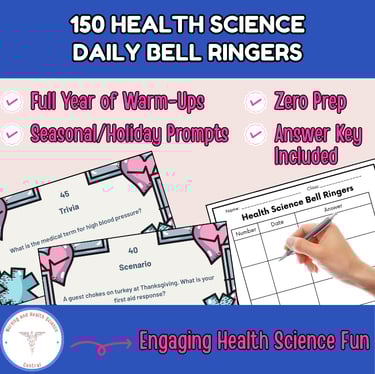
P.S. If you want something that takes the guesswork out of daily engagement, bell ringers and quick review activities are lifesavers during this stretch. Short problems that keep brains active without being overwhelming.
Health Science Bell Ringers & Warmups make it easy to reset focus and keep students engaged.